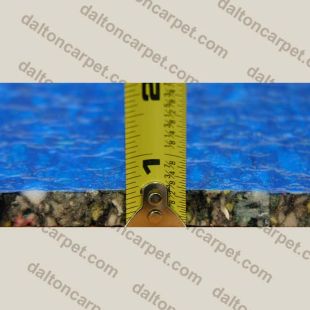
The main purpose of a carpet pad is to protect your carpet. The pad keeps the underside of your carpet from wearing against the bare floor. It also absorbs the impact from footsteps and furniture, lessening the stress on the carpet.
Installing the wrong pad can sometimes void your carpet's warranty, so always look at the carpet manufacturer's recommendations. If you're replacing carpet, don't be tempted to save by using the existing pad. It almost always needs to be replaced.
Regardless of any other traits, density -- or how much weight it has for a given thickness -- is the key to a carpet pad's usefulness. If your padding isn't dense enough, it won't adequately protect your carpet -- if the pad can be completely compressed, your carpet absorbs wear with each impact. In fact, a carpet pad's density is rated according to the force needed to compress it in this way. The most common pad referred to as rebond, begins at at 3lb density up to a 9 lb +, the higher the number the higher the density and firmer the pad. A 6 or an 8 is preferred for most residential cut pile and textured carpets.
A bonded pad is versatile and can be a good choice for most situations, as long as you avoid padding that's too thick. Seven-sixteenths of an inch is the most common. In part, this is because a thick pad allows too much up-and-down movement of the carpet, wearing the backing as it flexes. Also, a pad that's too thick can allow the carpet to pull away from the tack strip that holds it flush with the wall.
Rubber pad has long been considered a premium carpet pad. The pads are solid and heavy in weight, so they aren't as soft as some pads. Some do not prefer the “stiff” feel. But they are long-lasting and give the carpet good support. They also are more expensive.
Synthetic pad is the oldest type of carpet cushion. Not generally used for residential, but they can be ideal in certain situations. In homes today, they are mainly laid down under area rugs to prevent their movement. They're more common in commercial applications to provide a very firm foot feel under carpets.
When choosing your pad, ask us which pad is recommended for the specific carpet you have chosen. We will be glad to give you options for the best performance and longevity.
The main purpose of a carpet pad is to protect your carpet. The pad keeps the underside of your carpet from wearing against the bare floor. It also absorbs the impact from footsteps and furniture, lessening the stress on the carpet.
Installing the wrong pad can sometimes void your carpet's warranty, so always look at the carpet manufacturer's recommendations. If you're replacing carpet, don't be tempted to save by using the existing pad. It almost always needs to be replaced.
Regardless of any other traits, density -- or how much weight it has for a given thickness -- is the key to a carpet pad's usefulness. If your padding isn't dense enough, it won't adequately protect your carpet -- if the pad can be completely compressed, your carpet absorbs wear with each impact. In fact, a carpet pad's density is rated according to the force needed to compress it in this way. The most common pad referred to as rebond, begins at at 3lb density up to a 9 lb +, the higher the number the higher the density and firmer the pad. A 6 or an 8 is preferred for most residential cut pile and textured carpets.
A bonded pad is versatile and can be a good choice for most situations, as long as you avoid padding that's too thick. Seven-sixteenths of an inch is the most common. In part, this is because a thick pad allows too much up-and-down movement of the carpet, wearing the backing as it flexes. Also, a pad that's too thick can allow the carpet to pull away from the tack strip that holds it flush with the wall.
Rubber pad has long been considered a premium carpet pad. The pads are solid and heavy in weight, so they aren't as soft as some pads. Some do not prefer the “stiff” feel. But they are long-lasting and give the carpet good support. They also are more expensive.
Synthetic pad is the oldest type of carpet cushion. Not generally used for residential, but they can be ideal in certain situations. In homes today, they are mainly laid down under area rugs to prevent their movement. They're more common in commercial applications to provide a very firm foot feel under carpets.
When choosing your pad, ask us which pad is recommended for the specific carpet you have chosen. We will be glad to give you options for the best performance and longevity.
Thanks so much for everything Lisa!
We are ecstatic about the carpets and incredible how much money we saved by using DaltonCarpet.com, even comparing to those “free installation” offers by Lowes and Home Depot!!
Thank you again!
Great Prices and discounts. Speedy service and delivery. First carpet order came in with a flaw but it was replaced quickly - very happy with that process. We are very pleased with your customer service and carpet. More people should shop with you.
I am so grateful to the people at DaltonCarpet for the way they helped us with replacing our gym floor and its surrounding area! From the beginning of the project to its completion, DaltonCarpet was there to help us at every turn. Maegan was not only courteous, professional, knowledgeable and kind but was available through email and/or phone throughout the project and frequently checked in with us to see how we were doing in the planning, installation and post-installation phases. Whenever I had a question about anything, she would respond quickly with helpful information. I highly recommend DaltonCarpet to help anyone with their flooring needs.
After contacting all the carpet companies in Dalton, I decided to order from Dalton Carpet because they were the most professional on the phone. They e-mailed me the quotes right away and in a format that was easy to understand. The carpet is wonderful (Mohawk 2S65 in 879 Patina), the pad is supper plush (I ordered the 8lb Supreme Odor/Spill Guard). Lisa was super easy to deal with and answered all my questions. All in all a very pleasant experience.
I purchased 1800 SF of carpet by phone and was apprehensive because carpet is not exactly what I would normally buy from several states away. The experience was amazingly positive! I went to my local stores chose the carpet I wanted by taking samples home. Once I decided on what I wanted, I called Dalton Carpet and Lisa was super helpful. I ended up saving 50% of what I would have paid locally even after paying for freight! Thank you Lisa!